Menu

- Monday - Saturday 09:00 AM- 8:30 PM
- Sunday - CLOSED

- +91 9319211545
- info@drrajeshmalhotra.com

- A -71, Second Floor, Rajouri Garden
- Metro Station, Delhi - 110027, INDIA
 93192 11545
93192 11545
93192 11545


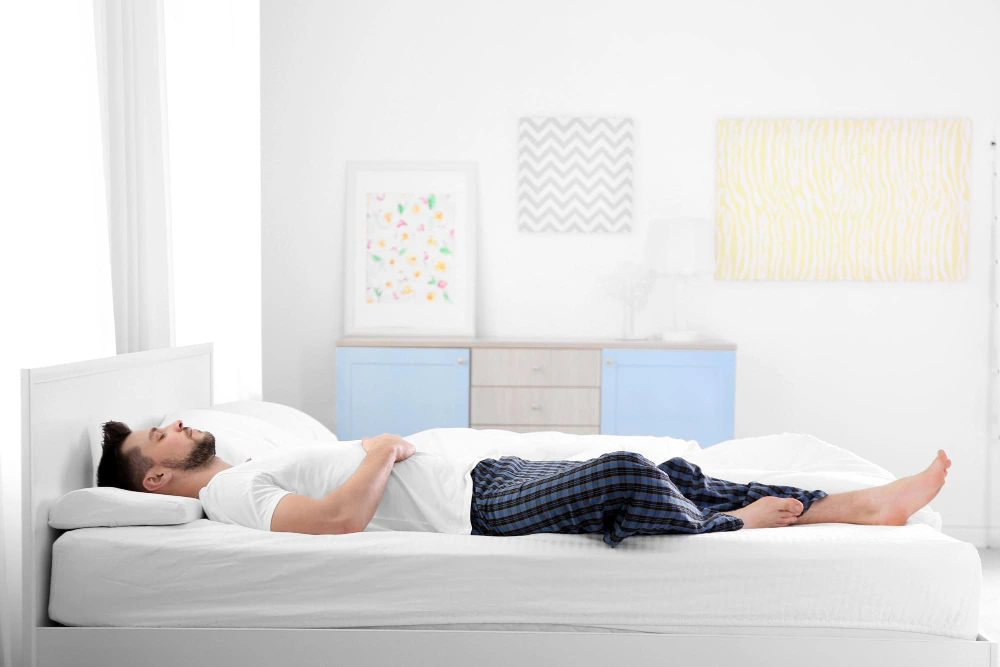
Sleep is an important factor in healing and recovery, particularly for individuals experiencing back and joint pain. Most people concentrate on the mattresses and pillows, yet sleeping position is not given much attention. Sleeping in a poor position may cause more pressure on the spine and joints, which aggravates the pain and stiffness over time. The correct sleeping position may help alleviate most of the body strain and offer a lot of comfort.
When one is asleep, the body must be placed in a neutral position with the spine in its natural curves. Poor sleeping postures may cause undue pressure on the neck, shoulders, lower back, hips, and knees. In the long run, such stress can worsen other underlying disorders like arthritis, slipped disc, or persistent back pain.
You can decrease inflammation, muscle relaxation, and overnight joint recovery by assuming the right sleeping positions.
Sleeping on Your Back (Supine Position)
The back position is usually recommended as the best posture for the spine. It balances body weight and eliminates pressure points. A small pillow that is placed under the knees, to support the natural lumbar curve, minimizes lumbar strain.
It is especially beneficial to those who have lower back pain or neck pain or are recovering after surgery.
Side Sleeping with a Pillow Between the Knees
Side sleeping is a great thing to do when one has lower back pain, hip pain, or arthritis in the knee. Pillowing in between the knees puts the hips into position and eliminates the pressure on the spine. The supportive pillow of the head and neck is also important to prevent neck stiffness.
The left side sleep position is usually suggested to individuals with inflammation in the joints and digestive issues.
Suggest to Read :- Innovations In Keyhole Surgery For Knee And Shoulder Disorders
Fetal Position for Herniated Disc Relief
The fetal position is sleeping with drawn-in knees a bit towards the chest. This stance provides the gap between the bones in the spine, and it may assist in relieving strain on spinal nerves. It can be useful when one has a slipped disc or sciatica.
But do not curl too tightly, which can either stop breathing or make one stiff.
Sleeping on Your Stomach – Not Recommended
The sleeping position of the stomach imposes too much pressure on the lower back and neck. It causes the spine to take an unnatural curve, and it can increase the pain in the joints. Provided that this posture cannot be avoided, it is possible to place a pillow under the pelvis that will alleviate it to some extent, though it is recommended to switch to back or side lying.
Sleeping position may be the best; however, it may not be effective without appropriate support. The medium-firm mattress tends to be more supportive of the spine as compared to very soft or very hard surfaces. The neck must not be tilted forward or backward on the pillows, but it should rest straight against the spine.
The personalised advice to the patients on the sleep ergonomics will regularly be provided at the site of the doctor, i.e., www.drrajeshmalhotra.com, hence the provision of the posture support will be individual to the patient.
When the pain in the back or joints persists despite the increase in the sleeping position, it can be a symptom of a medical condition. A specialist should examine persistent pain, morning stiffness, or radiating pain.
Patients are provided with a complete evaluation and an evidence-based treatment plan of spine and joint disorders under the care of a skilled specialist Dr Rajesh Malhotra.
Alterations of sleeping position, even a little, can go a long way in the treatment of back and joint pain. The correct positioning, supportive mattress, and regularity are the elements of pain management and improved sleep quality.
To seek professional assistance on the management of posture, joints, and the overall musculoskeletal well-being, the site, www.drrajeshmalhotra.com, is a proven place to get all the orthopaedic advice and patient care.
Copyright @2026 Design By DigitalNetIndia