Menu

- Monday - Saturday 09:00 AM- 8:30 PM
- Sunday - CLOSED

- +91 9319211545
- info@drrajeshmalhotra.com

- A -71, Second Floor, Rajouri Garden
- Metro Station, Delhi - 110027, INDIA
 93192 11545
93192 11545
93192 11545


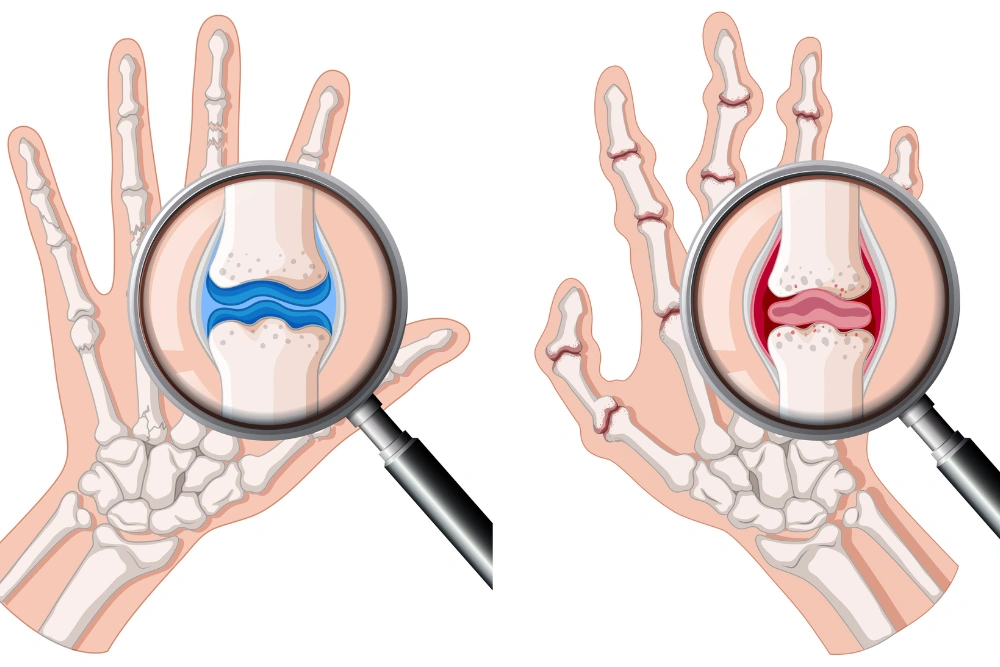
Arthritis is a condition that people talk about as one, and in an actual sense, it has numerous joint disorders. Osteoarthritis and rheumatoid arthritis are the two most prevalent ones. Although the two are similar in that they both provoke joint pain and stiffness, their causes, progression, and treatment methods differ significantly. It is important to know these differences in order to diagnose and treat them at an early age.
Osteoarthritis (OA) is the most prevalent arthritis, which is mostly a degenerative joint disease. It occurs over time when the cartilage that covers the ends of the bones gets eroded. When cartilage is thinning, bones start rubbing against one another, causing pain, stiffness, swelling, and limited mobility.
Osteoarthritis normally attacks weight-bearing joints, including knees, hips, spine, and, in some cases, hands. It occurs more frequently in individuals above 40 and is frequently associated with age, obesity, past joint injuries, and repetitive joint stress.
Osteoarthritis symptoms are usually activity-deteriorating and rest-improving. Morning stiffness is generally mild in nature and is of short duration.
Rheumatoid arthritis (RA) does not constitute a wear-and-tear condition, but an autoimmune disease. The immune system of the body in RA wrongly attacks the joint lining, leading to chronic inflammation. In the long run, this inflammation may cause cartilage damage, bone damage, and damage to peripheral tissue.
In rheumatoid arthritis, smaller joints in the hands, wrists, and feet are usually the first to be affected, and it is usually symmetrical in both sides of the body. It might occur at any age, and other organs could also be impacted by it, such as the lungs, eyes, and heart.
In contrast to osteoarthritis, RA symptoms are more pronounced in the morning, and stiffness takes over an hour. Other common ones are fatigue, fever, and general weakness.
Suggest to Read :- Innovations In Keyhole Surgery For Knee And Shoulder Disorders
Osteoarthritis and Rheumatoid Arthritis.
Principal distinctions of osteoarthritis and rheumatoid arthritis are in their cause and symptom distribution:
Due to the overlapping nature of the symptoms, it is necessary to diagnose a patient correctly with the help of clinical examination, imaging, and blood tests.
Both conditions are treated based on alleviating pain, maintaining the joints, and delaying the onset of the disease. The treatment method is, however, very different.
Treatment of Osteoarthritis involves lifestyle, weight management, physiotherapy, pain-relieving drugs, and injections into the joints. In severe instances, surgical procedures may be suggested, such as joint replacement.
Rheumatoid arthritis is a disease that needs early and intensive management using disease-modifying drugs to curb the inflammation and damage of the joints. Physiotherapy and frequent check-ups are significant in keeping the patient mobile.
The full arthritis care is available at the website of drrajeshmalhotra.com, where the patient takes care of the condition under the guidance of Dr Rajesh Malhotra, and the evidence-based treatment of the disease is given to the patient.
Even though osteoarthritis and rheumatoid arthritis have certain symptoms in common, the two are quite different diseases. A proper treatment plan and early diagnosis may play a significant role in raising the quality of life and avoiding long-term joint damage.
When you have ongoing pain in the joints, stiffness, or swelling, it is important to seek the attention of an expert orthopaedic practitioner. Through quality care, proper diagnosis, and tailored treatment, www.drrajeshmalhotra.comhttps://www.drrajeshmalhotra.com/ enables patients to overcome arthritis and remain active, independent, and pain-free.
Copyright @2026 Design By DigitalNetIndia